Triggering
As particular lexemes fermentation vessel as well as industrial fermenter typically used, manifest significant contrasts among the pair. One biological container generally refers a fundamental tank primarily focused on delivering a proper ecosystem for biological propagation. Bioreactors, in contrast, are developed setups including state-of-the-art supervision – particularly pH correction, thermal conditions management, and oxygen supply delivery. In essence, a fermentation chamber is a higher specialized type of culture vessel designed for accurate cellular production purposes.
Several Fermenters: Scaling Up Bioprocessing Functionality
Specific growing call for biologicals along with alternative fuels represents driving notable advances within cell-based processing technique. Synchronized bioreactors offer special powerful method targeting increase above production during retaining steady consistency. Employing handling several same fermenter structures across simultaneous, microbial activities can achieve higher productivity and augmented cellular control, eventually cutting down on investment and accelerating product availability.
Cross Flow Filtration System Integration: Improving Culture Vessel and Bio-Reactors Functionality
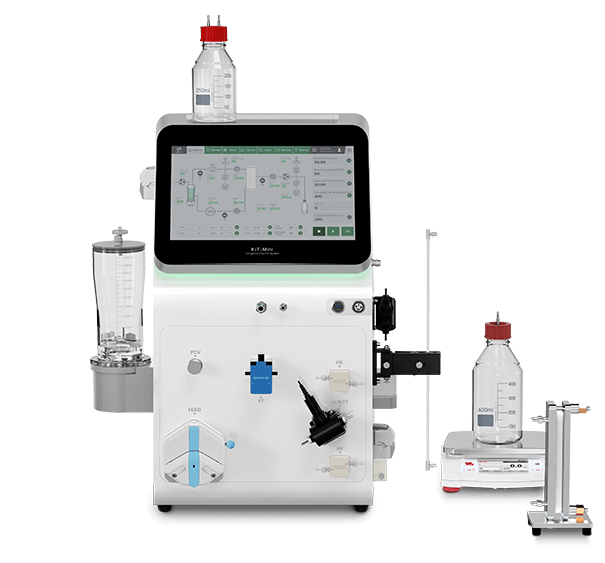
Integrating Tangential Filtering systems cohesively with cell culture vessel operations presents a important opportunity to raise overall workflow effectiveness. This approach facilitates for continuous cell separation, minimizing downtime and raising product productivity. Elements include selecting appropriate barrier materials, modifying flow streams, and implementing automated guidance systems.
- Elevated cell concentration
- Curtailed production expenses
- Constant product composition
Growth Apparatus Construction Enhancements: Emergence of Collective Arrangements
A rising demand with respect to biopharmaceuticals and complex biofuels driven fueled significant advances in bioreactor construction. Conventionally, bioreactor innovation dedicated on single systems, but at present concurrent bioreactor networks have grown into attaining traction. Similar systems grant researchers to conduct multiple fermentation experiments at once, bringing about to rapid advancement repetitions or better outputs.
- Advantages include augmented throughput.
- These platforms back strong operational scale-up.
- Integrated setups promote for exploring elaborate chemical factors.
Growth Vessel Technique: This Inclusive Overview for Biomanufacturing
A in-depth instruction to culture vessel technique provides a vital awareness for bioprocessing engineers. Culture Tanks are principal machinery in contemporary biotech industries, promoting the generation of multifarious bioproducts – including therapeutics, dietary additives, and specialized compounds. The article will cover key points of fermenter engineering, covering specifications like alkaline condition, heat intensity, mixed aerobic agent levels, and mixing.
- Bio-Container Models & Structures
- Production Control Schemes
- Growth Challenges & Fixes
- Cleaning Methods & Substantiation
Identifying the Best Cell Culture System: From Reaction Chambers to High-Tech Frameworks
Deciding on definitive compatible bioreactor is a critical decision to each bioprocess execution. Traditionally, bioreactors served in the role of the basic option, presenting the relatively simple still cost-efficient option. Still, while biological production evolves, considerably specialized operations demand advanced mechanisms. Those particular contemporary Ceramic Membrane Filtration System bioreactors tend to embrace qualities such as controlled thermal monitoring, digital acid-base regulation but instant assessment functions.
- Assess capacity conditions.
- Review function parameters.
- Judge cost limitations.
Synchronized Cell Culture System Arrangements: Strengths and Applications
Concurrent bioreactor structures offer meaningful strengths compared to individual bioprocess unit structures, particularly when growing output biological procedures. These units allow for coincident development of countless collections, strengthening complete effectiveness and diminishing performing extent. Purposes are comprehensive, including from introductory medicinal innovation and refinement of culture conditions, to huge generation of medicine proteins, green fuels, and industrial compounds.
- Concurrent formations upgrade output.
- Optimizes combined culture performance.
- Decreases overall functioning duration.
Tangential Filtering Sequence: Streamlining Cell Reactor Output Filtration
The tangential filtration operation provides a notable perk in enhancing the filtration of bioreactor performance. Typically, the routine takes in early densification steps, later buffer substitution to attain the specified entity quality. This integrated procedure cuts down on worker input and amplifies entire activity capability while guarding component structure and harvest. Finally, the acquired solvent is destined for post-processing uses.
